

Diagnostic & Operative Laparoscopy
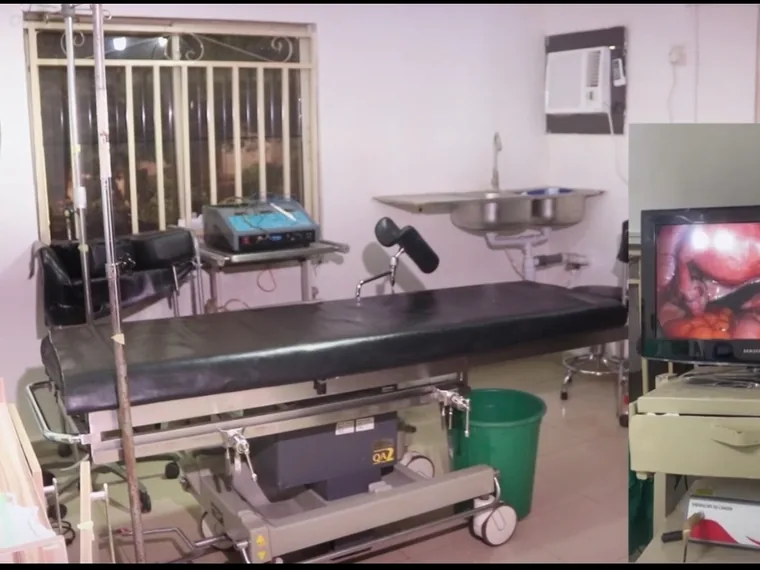
Keyhole surgery using a camera passed through a small incision to diagnose and treat conditions inside the abdomen and pelvis. Performed at Mother and Child Fountain of Life Specialist Hospital in Nnewi, Anambra State.
Laparoscopy allows the pelvic organs to be examined directly through incisions usually under a centimetre long. A camera is passed into the abdomen, which is gently inflated with gas to create working space.
Diagnostic laparoscopy investigates pelvic pain, suspected endometriosis, adhesions and tubal disease - often when scans have not given a clear answer. Operative laparoscopy treats what is found in the same sitting: removing endometriotic deposits, dividing adhesions, removing ovarian cysts or treating ectopic pregnancy.
Compared with open surgery, laparoscopy generally means less pain, a shorter hospital stay, smaller scars and a faster return to normal activity.
What the process involves
- Assessment - History, examination and imaging to decide whether laparoscopy is indicated.
- Anaesthesia - The procedure is performed under general anaesthetic.
- Laparoscopy - Camera and fine instruments are introduced through small incisions.
- Treatment - Where possible, the problem is treated during the same procedure.
- Recovery - Most patients go home the same day or the following day.
Common questions
Most people return to light activity within a week and to full activity in two to three weeks, depending on what was done.
Incisions are typically 5–10mm and usually fade to barely visible marks.
Very often yes. We discuss beforehand what we may treat during the procedure so that consent covers it.